

When commuters can pay subway with phone, pass gates seamlessly, and trust a system that recognizes identity in seconds, public transit moves from functional to intelligent. Hanoi Metro’s recent launch of a fully automated fare-collection (AFC) system on the Cat Linh–Ha Dong line is a clear signal of where global urban mobility is headed. According to The Hanoi Times, the new system integrates digital identity, biometric recognition, and cashless payments—supporting the city’s vision of smart, green transportation (source).
This evolution reflects a broader global trend: the tap payment device is no longer a simple card reader. It is becoming a smart mobility hub—connecting payment, identity, security, and data. For transit authorities, system integrators, and solution providers, choosing the right hardware foundation is now a strategic decision.
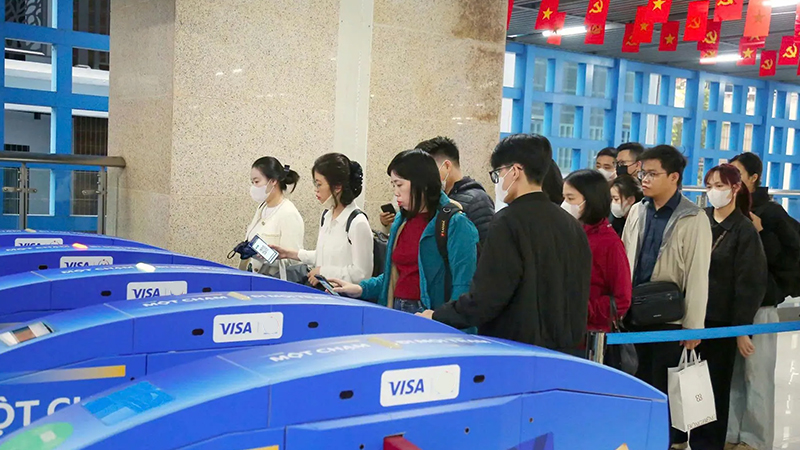
Photo: Kinh te & Do thi Newspaper
Tap and Go Card Readers Have Evolved Beyond Simple Card Swiping
Multi-Standard Reading Capabilities Define Modern Validators
Modern tap and go card readers have evolved from basic RFID scanners into sophisticated terminals capable of processing multiple credential types simultaneously. Passengers now expect to pay subway with phone using NFC-enabled smartphones, tap contactless bank cards for visa card tap to pay transactions, or use traditional smart cards—all at the same validator.
This convergence requires validators that support:
- Multi-standard reading: NFC, QR codes, EMV contactless, and chip cards
- Instant processing: Sub-second transaction times to prevent gate congestion
- Offline resilience: Secure transaction storage when network connectivity drops
- Future-ready architecture: Expandable SAM (Secure Access Module) slots for new payment schemes
Advanced Tap Card Payment Systems Deliver Measurable ROI
Transit agencies investing in comprehensive tap card payment systems report measurable benefits:
- Reduced boarding times: Contactless payments cut boarding delays by 30-40% compared to cash handling
- Lower operational costs: Automated systems eliminate ticket booth staffing and cash reconciliation overhead
- Increased ridership: Frictionless payment removes barriers for occasional riders and tourists
- Revenue protection: Real-time validation and gate integration minimize fare evasion
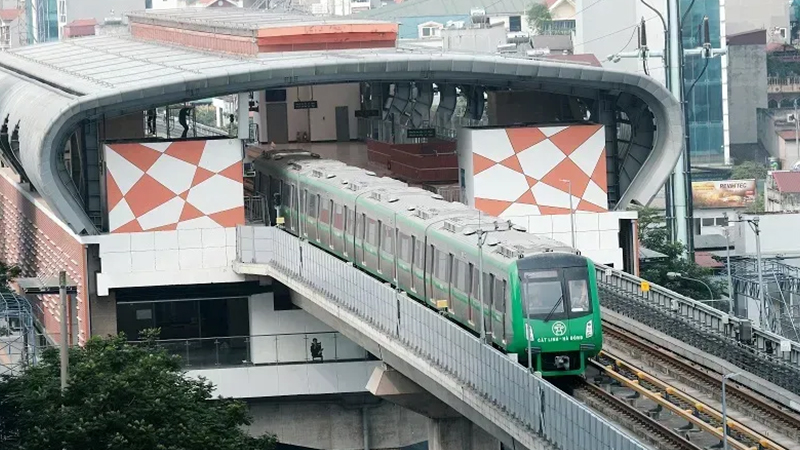
Photo: Kinh Te & Do Thi Newspaper.
Automatic Fare Collection AFC Systems Now Provide Intelligence Beyond Payment Processing
The term automatic fare collection AFC now encompasses far more than payment capture. Modern AFC ecosystems integrate validators with cloud-based back-office systems, enabling:
- Dynamic pricing: Time-of-day or demand-based fare adjustments
- Intermodal transfers: Seamless payment across metro, bus, and bike-share networks
- Analytics-driven planning: Passenger flow data informing route optimization and capacity planning
For these systems to function, validators must act as data nodes—not just transaction endpoints. This demands robust connectivity (4G/Wi-Fi), secure data protocols, and edge computing capabilities to pre-process information before cloud transmission.
Automated Bus Fare Collection Systems Face Unique Environmental Challenges
While metro validators operate in controlled, indoor environments, automated bus fare collection systems face additional challenges:
- Environmental extremes: Wide temperature ranges, vibration, and exposure to sunlight
- Power constraints: Reliance on vehicle electrical systems with voltage fluctuations
- GPS integration: Location-based fare calculations for distance-based pricing
- Driver interface: Compact designs that don't obstruct operator workspace
Ruggedized Hardware Meets Bus-Specific Operational Demands
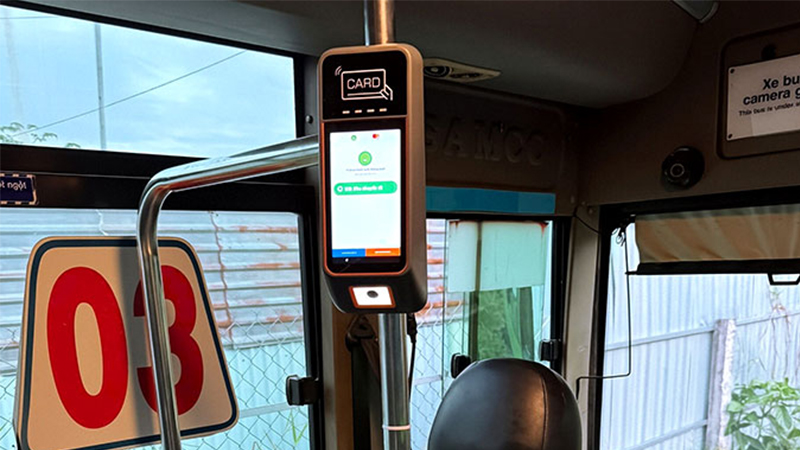
The Telpo T10 ticket validator machine addresses these requirements with a compact 5.5-inch touchscreen design optimized for space-constrained installations. Key features include:
- IK07 impact resistance and optional IP54 ingress protection for harsh operating conditions
- Anti-glare 500cd/m² display ensuring readability in direct sunlight
- Dual-SIM 4G connectivity with optional eSIM and external GNSS/4G antenna for reliable vehicle tracking
- E24 certification meeting EU safety, environmental, and EMC standards
- 6 SAM slots providing flexibility for regional payment schemes and future upgrades
The integrated GPS functionality enables sophisticated features like zone-based pricing and real-time passenger counting—critical inputs for route planning and service frequency optimization.
Metro Validators Are Becoming Biometric Authentication Gateways
As cities pilot fare-by-face and digital identity programs, metro validators are incorporating biometric authentication. This requires:
- High-resolution cameras: Capturing facial data under varied lighting conditions
- Liveness detection: IR sensors preventing spoofing attempts with photos or masks
- Privacy compliance: Secure on-device processing or encrypted transmission to local regulations
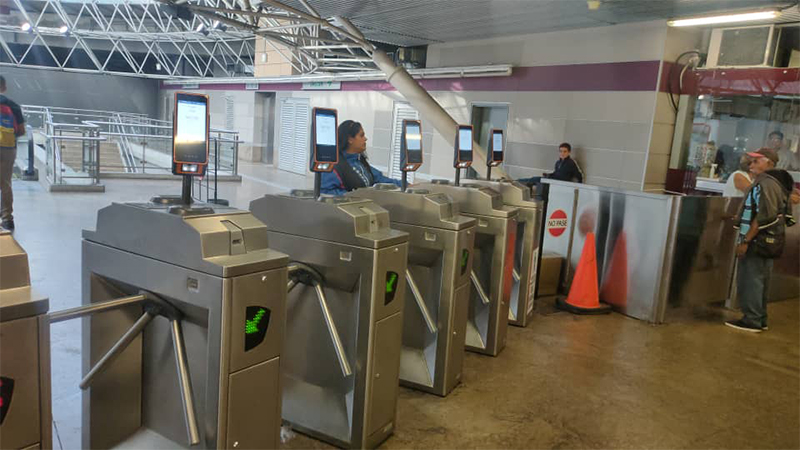
The Telpo T20 master card validator positions operators for this future with optional dual-lens camera integration (RGB + IR). Combined with its Android 12 OS (or Linux alternative), the T20 supports:
- On-device biometric matching: Reducing latency and privacy concerns
- Multi-modal authentication: Face + card, or face + QR code for enhanced security
- Display built for transit environments: 7-inch touch screen with anti-glare and 500 cd/m² brightness shows excellent readability in semi-outdoor conditions
- With 8 SAM slots, IP65/IK08 certification, and comprehensive peripheral ports for gate control, the T20 serves as a ticket verifier capable of orchestrating complex multi-gate layouts in high-traffic stations.
Validator Selection Requires Matching Tap Payment Devices to Deployment Context
Transit operators must align validator specifications with deployment scenarios:
| Environment | Recommended Features | Example Solution |
| Bus/Tram | Compact size, SAM expandability, GPS, external antenna | T10 with 6 SAMs, dual-SIM |
| Metro gates | Larger display, ruggedized, camera-ready, rich peripheral ports | T20 with IP65, Face camera |
| Light rail | Balance of durability and connectivity | Either, based on space/budget |
For agencies with mixed fleets, standardizing on a common payment kernel across devices simplifies integration while allowing hardware customization per vehicle type.
Open-Loop Payments and MaaS Integration Define the Next Evolution
The next frontier involves true open-loop systems where any contactless bank card or mobile wallet becomes a transit credential—no pre-registration required. This demands bus card reader certified for EMV contactless specifications and capable of handling variable fare capping across multiple days and routes.
Additionally, Mobility-as-a-Service (MaaS) platforms require validators to support third-party APIs, enabling real-time availability data and cross-modal journey planning. A robust validator thus becomes a critical node in a city's broader digital infrastructure.
Future-Proofing Transit Through Intelligent Validation
Hanoi Metro's AFC launch underscores a global reality: ticketing hardware is now mission-critical infrastructure for smart cities. Whether deploying in buses or metro stations, operators need validators that transcend basic card-reading to deliver multi-modal payment processing, biometric readiness, and data intelligence.
For organizations evaluating their next-generation fare collection strategy, explore Telpo transit validation solutions—engineered to meet today's contactless payment demands while providing the SAM expandability, camera integration, and environmental durability required for tomorrow's innovations.